Technological Novelty: Recommendation on The RESET App in Encouraging Experience of Positive Emotions Among Employees from A Private Company in Kuala Lumpur,
Malaysia
Kavena Sivapragasam, Hilwa Abdullah @ Mohd Nor
Center for Research in Psychology & Human Well-Being, Faculty of Social Sciences & Humanities, Universiti Kebangsaan Malaysia, Bangi, Selangor.
Corresponding Author:
Hilwa Abdullah @ Mohd Nor, PhD
Centre for Research in Psychology & Human Well-Being,
Faculty of Social Sciences and Humanities,
Universiti Kebangsaan Malaysia,
43600 Bangi, Selangor Email: hilwa@ukm.edu.my
Background: Depression is a mental disorder that negatively affects the individual’s emotions, thoughts and actions. According to the 2019 National Health and Morbidity Survey, the depression prevalence among Malaysian adults aged 18 and above was estimated at 0.5 million and the World Happiness Report listed Malaysia as the 80th happiest country. With such data, it is time to implement a unique approach in managing psychological challenges. Positive technology, is a relatively novel field of study that builds design to nurture the user’s well-being.
Objective: This research aims to identify recommendations and suggest improvements of a mobile application called the RESET app towards influencing the level of happiness, gratitude, mindfulness and productivity among users. The Broaden-and-Build theory for positive emotions and the RESET concept were primarily involved in the research’s development.
Methods: A total of 33 employees from a private company in Kuala Lumpur were involved through a 7-month mixed method quasi-experiment and was conducted in two
phases: quantitative data collection and qualitative data collection via interview. A Happiness Questionnaire (HQ) was administered and it consisted of the Gratitude
Questionnaire-6 (GQ-6) to measure gratitude, the Oxford Happiness Questionnaire (OHQ) to measure happiness, Five Facet Mindfulness Scale (FMMQ) for measuring mindfulness and Endicott Work Productivity Scale (EWPS) to measure productivity level of respondents. A final interview was conducted with randomly selected respondents.
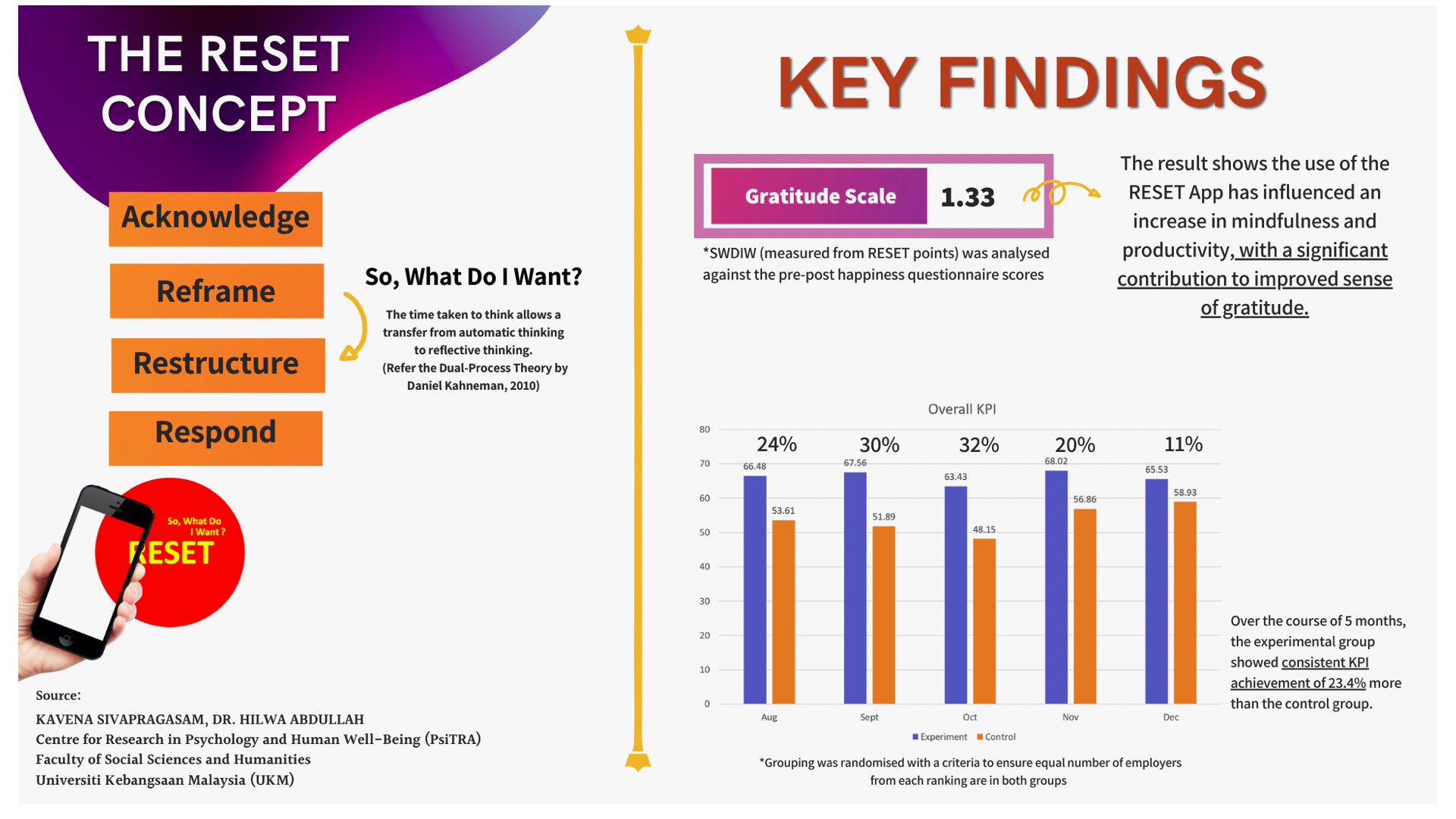
Results: The quantitative results showed that the affirmative question had a significant influence on the Gratitude Questionnaire-6 (GQ-6) scores (R2=0.70, F (1, 13) = 12.76, p < 0.05). Furthermore, the interview showed an overall positive feedback and the main theme revolved on the emotion-cognition integration. Referring to the RESET app, the
‘no comment’ feature, gratitude journaling and the affirmative question were identified as favourites among the respondents.
Conclusion: This research has deepened the understanding on the influence of mindfulness through the affirmative question ‘So, What Do You Want?’ towards gratitude which can be further integrated in the development of positive technology.
RESET App, Positive Technology, Human Computer Interaction, Mental Health
BACKGROUND
The World Happiness Report published in 2019, stated that Finland was the happiest country in the world for two consecutive years while Malaysia, experienced a significant declination from the 35th place in 2018 to the 80th place in 2019. (Helliwell, Sachs & Layard 2019). Furthermore, the happiness index of the Malaysian population saw a decrease from 6,322 to 5,339 (Helliwell, Sachs & Layard 2019). Statistics published by the World Happiness Report Committee have also found that Malaysia has experienced negative changes in the level of happiness of its population from 2008 to 2019.
The data analysis highlighted several common aspects among countries with high levels of happiness and these were: the green urban living environment or also known as ‘green space’, the economic situation of the country, social interaction, the level of environmental pollution, national security, natural disasters and educational opportunities (Helliwell et al. 2020). Upon comparison with the situation in Malaysia, the country can be considered stable. However, improvements are needed in these aspects to increase the level of happiness among the Malaysian population (Bertram & Rehdanz 2015; Mohd Hisyam Rasidi, Nurzuliza Jamirsah & Ismail Said 2012; Nath, Sim & Lechner 2018). With improvements, this can then help in improving the population’s quality of life as it is undeniable that every individual is striving towards goals that ultimately lead to happiness and for most individuals, failure to achieve those benchmarks, will result in negative effects such as depression and anxiety (Achor 2010; Achor 2012).
The American Psychiatric Association (APA) defined depression as a concerning type of mental illness due to its negative impact on an individual’s feelings, thoughts and actions (Parekh 2017). Depression has recently been a global issue and in the ‘2017 Depression: Let’s Talk’ program, the World Health Organization (WHO) estimated that more than 300 million individuals suffered from clinical depression with an increase of more than 18 percent between 2005 and 2015 (World Health Organization 2017). According to the National Health and Morbidity Survey (2015), 4.2 million Malaysians aged 16 and above were diagnosed with mental health challenges; an increment of 16 percent since 2006. Following the National Health and Morbidity Survey report (2019), the prevalence rate of depression among adults aged 18 and above is 2.3 percent which is equivalent to almost 0.5 million Malaysians. With happiness and depression at opposing ends of the continuum, many individuals are experiencing varying degrees along this continuum (Achor 2010; One 2013; Street 1999). Ironically, success has been an important denominator in the continuum but with recent advancement in research, this perception has been made questionable when studies now show that happiness is a significant element in driving success and specifically, improved employee performance (Achor 2010).
Based on a study conducted in the Lithuanian region, a total of 378 employees evaluated all dimensions of happiness as contributing factors to job satisfaction at their workplace (Bakanauskiene, Bendaraviciene & Daugintaite 2020). Other studies have shown that employees given a safe and positive environment that enriches their wellbeing, will encourage them to show more creativity in idea generation and work satisfaction (Koutiva et al. 2020). Moreover, the Employee Happiness Index survey conducted by JobStreet.com in 2017, ranked Malaysia as 4th out of seven other Asian countries with a score of 4.65 on a 10-point scale (JobStreet 2018). This survey identified three key determinants for job happiness among 10,143 employees, namely: good work location, having good colleagues and company reputation. Based on other surveys, evidence has shown that in summary, two factors have been identified in influencing employee performance in an organisation: 1. Experience with positive impact and 2. Comfort of the work environment (Walsh, Boehm & Lyubomirsky 2018).
In recent years, the use of information and communication technology facilities has received more and more attention in the context of work stress especially against burnout conditions (Ninaus et al. 2015). Burnout is a psychological condition that encompasses dimensions of lethargy, cynical behavior toward work and its employer as well as having diminished professional efficacy (Castellano et al. 2019; Grandey 2015; Ozkan & Ozdevecioglu 2013). Burnout conditions as well as work engagement have become a focus in the field of occupational studies and as noted by Bakker and Albrecth (2018), employees engaged in their work will experience positive emotions more frequently which will broaden their cognitive abilities. With the occurrence of such rapid technological development and its relevance in occupational settings, it is undeniable that the convenience of information and communication technology will continue to be an important element in human life (Riva et al. 2012). Hence, the field of Positive Technology has been introduced as a scientific approach that aims to use technological facilities to improve the quality of user experience and in the context of this study, towards positive employee experience (Botella et al. 2012; Davis 2017). This field focuses on combining the field of positive psychology with the improvement of information and communication technology facilities from three aspects: emotional quality, engagement and connectivity (Botella et al. 2012). Nevertheless, the introduction of this field is still new and there is a lack of numerous scientific studies to provide a deeper understanding of the integration of technology into user work experience (Brivio et al. 2018).
In conclusion, this study has been designed to assist individuals, especially employees towards living happier and more satisfying personal as well as professional lives through the use of technology. With statistics published by the World Happiness Report and the National Health and Morbidity Survey, the researchers aim to rise to the challenge of combating mental health issues by focusing on promoting the practice of applying positive thinking through the application of positive technology. The researchers have proposed a view that to combat negative mental states, an individual should be more expressive and it is suggested that emotional expression will contribute to increased work productivity as well as overall, promote a more positive well -being of life.
RESEARCH PROBLEM
Even when the field of positive psychology is rampantly developing, there is still a lack in contribution of related studies. In 1998, with each positive psychological study, there were 17 studies on depression and negative mental disorders that were being conducted and published (Achor 2010). Although the ratio has decreased, there is still a publication gap between research on positive psychology and clinical psychology.
Positive psychology is a relatively new field in the world of psychology but it has become an increasingly relevant field to drive the development of human potential in achieving what is believed to be a fulfilling life (Seligman & Csikszentmihalyi 2000). With the intensified efforts towards positive psychology research, this would nudge experts to broaden their perceptions and quoting Martin E. P Seligman (2005), ... Positive psychology is the study of the conditions and processes that contribute to the flourishing or optimal functioning of people, groups and institutions. Positive psychology is about scientifically informed perspectives on what makes life worth living. It focuses on aspects of the human condition that lead to happiness, fulfillment and flourishing ...
In addition, there is also a lack of academic research on the field of positive technology and moreover, no study has yet to be conducted with the focus on the RESET app introduced in this research. A factor that is likely to influence the lack of academic contribution is that this field is still in its infancy stage (Riva et al. 2012). Recently, the concept of human-computer interaction has gained attention towards the effort in building technological facilities that can promote the mental health and well-being of users (Gaggioli et al. 2017). While technology is continuously expanding to meet the needs of the rapidly developing society, there is a lack of technological application produced to meet positive technological objectives, especially in the Asian context (Md. Rashedul Islam, Md. Rofiqul Islam & Mazumder 2010).
According to Gaggioli et al. (2017), such an application is likely to provide an approach that has the potential to be effective in integrating prevention strategies into users ’daily lives. Therefore, communities need to take the initiative to delve deeper and understand more about how they can leverage technology to improve the society’s well -being. It has also been predicted that technology will become a commonplace in the world of psychological research as an effort to better understand its role in the assurance of human well -being (Yaden, Eichstaedt & Medaglia 2018).
APPLIED THEORY
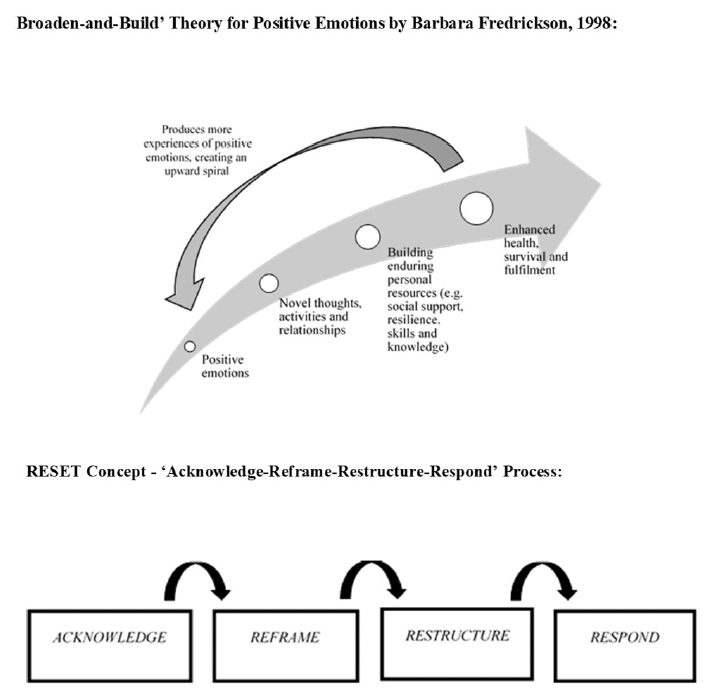
This theory focuses on behaviors to cultivate positive emotions in order to broaden their visual perception and become more sensitive to the opportunities available in their environment, which were previously blurred by negative emotions (Fredrickson 1998; Fredrickson 2001; Fredrickson, 2004; Fredrickson et al. 2017).
According to the 'Broaden-and-Build' theory, positive emotions are found to expand thought-action tendencies by increasing an individual's ability to pay attention, think flexibly and creatively and enable him to think problem-solving oriented (Fredrickson 1998; Fredrickson 2001; Fredrickson, 2004; Fredrickson et al. 2017). This will indirectly build healthier psychological, physical and social needs of the individual (Conway et al. 2012). There are several components discussed in this theory and the main component is attention. The ability for positive emotions to stimulate the expansion of an individual’s attention is in contrast to the ability demonstrated by negative emotions whereby negative emotions are found to diminish an individual’s focus (Conway et al.2012; Fredrickson 2000). This is in line with the ‘fight or flight’ mechanism that is triggered when an individual is in a situation that threatens his well-being.
In this research, this theory has been adapted using the RESET app, which aims to transform the thinking process of the respondents to a more ideal and positive form of thinking. The integration of this app in the workplace environment is expected to help employees build and forget meaningful relationships with their colleagues. This in turn, can encourage employees to work better in achieving their professional goals and ultimately, succeed at the workplace. This process would then produce the feelings of happiness and gratitude within the employee. Based on this theory, the trigger that drives this cycle, is the application of RESET and this research examined whether it would help in encouraging more positive emotional thinking and practice.
The concept of RESET proposed by the researchers includes four levels, namely: 1. Acknowledge, 2. Reframe, 3. Restructure and 4. Respond. In the first level, the concept encourages an individual to acknowledge and accept a situation as it is without preliminarily reacting to it. This is in line with the description of the Monitoring and Acceptance theory (MAT). MAT suggests that awareness can influence positive re -evaluation when an individual’s ability to make evaluations stems from a more flexible perspective (Garland et al. 2015). This level also focuses on the sensitivity to the emotions and thoughts that are being felt by the individual. Once the situation, emotions and thoughts of the individual have been acknowledged, the second stage will begin whereby the individual needs to ‘separate’ himself from the reality of the situation and make an evaluation of it. This process includes the assessment of the nature of the emotions and thoughts as well as whether the situation is in an ideal and safe state or otherwise. The result of this assessment will be taken to a third level which requires the individual to change his thought structure about the situation to produce a more ideal perception. With the transformation of his thoughts, this would indirectly change the emotions experienced to become more positive. When this restructuring process has been completed, only then would the individual move to the final stage and respond with a more rational action in the situation. The whole process occurs at a very short rate, however, the aspect of awareness was proposed to play a role in regulating the ability of individuals to apply this process more effectively.
SAMPLING TECHNIQUE
The study was conducted in a private organisation located in Kuala Lumpur, Malaysia and the researchers were given informed consent to involve its employees. There were
two justifications that support the selection of the location for this research: 1. The location was conducive for employees and 2. The location resembled the actual work
environment. Moreover, it is in a form of a pilot study and therefore, the number of respondents required was smaller in size, n = 30 (Whitehead et al. 2016). The study also
lasted for seven months. A total of 33 employees participated in this research and they had provided an informed consent prior to the start of the first phase. The sampling
method used was simple and purposeful as it was a conducive method for the researchers. However, the selected respondents had to meet several inclusion criteria: that the
respondent must be over 18 years old, owns a Malaysian citizenship, had at least one year of work experience with this private organisation, has the ability to communicate in
English or Malay and must own a smartphone that was accessible to Wi-Fi connection.
MEASURES
Independent Variable:
The RESET app is a mobile application that was conceptualised by a Malaysian company, The LOA Center (M) Sdn. Bhd with technical assistance from a technology
company, R.E.C. Studios Enterprise in 2018. This app was built based on the RESET Concept which was introduced by Michael J. Losier (2000) in his book ‘Law of Attraction:
The Science of Attracting More of What You Want and Less of What You Don't’. This app was developed using two languages - Malay and English. The use of the language is
based on the target population of users in Malaysia. However, efforts to expand the use of diverse languages are being intensified by the parties involved to facilitate access to
a larger population globally. The main features of the RESET app are the user profile registration section, the use of the RESET concept via the Affirmative Question ‘So, What
Do You Want?’, the gratitude writing section, the social site and the user profile information section.
Dependent Variables:
Four domains were measured in this research: happiness, gratitude, mindfulness and work productivity. The scales used to represent each domain were the Gratitude
Questionnaire-6 (GQ-6) to measure gratitude (Gouveia et al. 2019), the Oxford Happiness Questionnaire (OHQ) to measure happiness (Cruise, Lewis & Mc Guckin 2006), the
Five Facet Mindfulness Questionnaire (FFMQ) to measure mindfulness (De Bruin et al. 2012) and the Endicott Work and Productivity Scale (EWPS) to measure perceived
work productivity (Despiegel et.al. 2012).
DATA COLLECTION
Quantitative Data Collection:
The Happiness Questionnaire (HQ) was administered before the start of the research (Pre-HQ) and after the completion of its period (Post-HQ). The pre and post Happiness
Questionnaire (HQ) had the same four main scales and in the post-study questionnaire (Post-HQ), there was the additional scale to measure the respondents' evaluation
towards the use of the RESET app and ‘Happiness Circle’.
Qualitative Data Collection: Data Collection::
An interview session was conducted with five randomly selected respondents and the sessions were recorded with consent. The data obtained were in -depth and detailed
about the experiences and opinions of respondents throughout the period of this study to the end.
ANALYSES
Quantitative Data Collection::
Data obtained from the scores of the complete Pre-HQ and Post-HQ were collected and analysed using the Statistical Package for the Social Sciences (SPSS) version 25.0
which was then descriptively presented. In addition, regression analysis was also performed to identify the dominant aspects in its influence on the dependent variables that
were measured among the respondents. For the qualitative data, thematic analysis was conducted to identify themes that frequently arise among respondents. This
information was then compared with the quantitative data.
SAMPLE DISTRIBUTION
The distribution of respondents by gender was almost balanced whereby female respondents comprised of 54.5% (n = 18) while male respondents comprised 45.5%. In terms
of age, the majority were aged between 25 to 29 years with 36.36%, followed by 30 to 34 years (21.21%) and 20 to 24 years (18.18%). A total of five respondents were found
to be aged between 35 to 39 years while only three respondents were aged more than 40 years. The mean age among the respondents was 35.58 years. In addition, the
respondents consisted of three races, namely Malays (9.09%), Chinese (63.64%) and Indians (27.27%). The respondents also consisted of three levels of job performance
where 30.30% were in high level, 39.40% in medium level and 30.30% in low level.
REGRESSION ANALYSIS
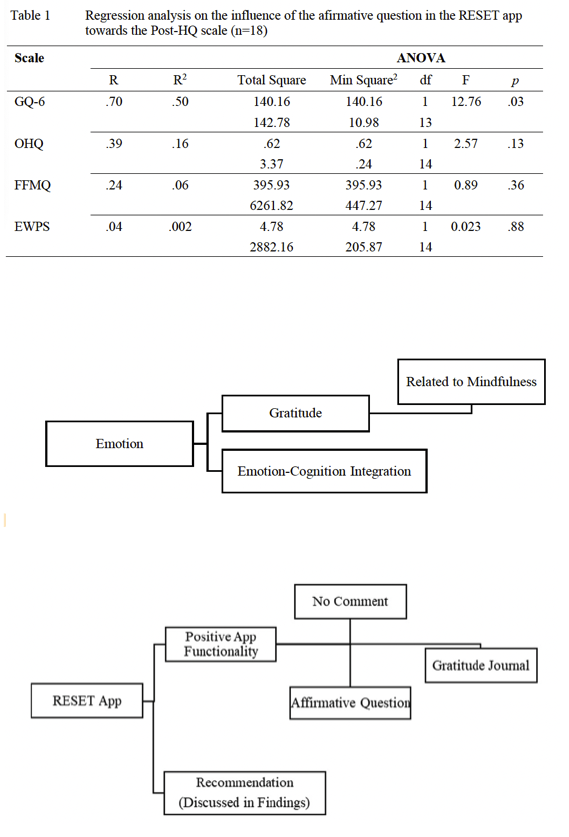
Regression analysis was conducted to identify the influence of the RESET app towards the scale scores of the Post-HQ. The results of the analysis are presented in Table 1.
"The analysis showed that the affirmative question score in the RESET app had a
significant influence on the Post-HQ GQ-6 score with a value of R2 = 0.70, F (1, 13) =
12.76, p < 0.05. However, the affirmative question score did not have a significant influence
on the OHQ score that is R2 = 0.39, F (1, 13) = 2.57, p> 0.05 while it is also not significant
on the FFMQ score with R2 = 0.24, F (1, 14) = 0.89, p> 0.05. Finally, the affirmative
question score had no significant influence on the EWPS score with R2 = 0.04, F (1, 14) =
0.023, p> 0.05. Overall, the results of the analysis show that the affirmative question score
in the RESET app is a significant factor in influencing the respondents' emotional gratitude."
According to the 'Broaden-and-Build' theory, positive emotions are found to expand thought-action tendencies by increasing an individual's ability to pay attention, think flexibly and creatively and enable him to think problem-solving oriented (Fredrickson 1998; Fredrickson 2001; Fredrickson, 2004; Fredrickson et al. 2017). This will indirectly build healthier psychological, physical and social needs of the individual (Conway et al. 2012). There are several components discussed in this theory and the main component is attention. The ability for positive emotions to stimulate the expansion of an individual’s attention is in contrast to the ability demonstrated by negative emotions whereby negative emotions are found to diminish an individual’s focus (Conway et al.2012; Fredrickson 2000). This is in line with the ‘fight or flight’ mechanism that is triggered when an individual is in a situation that threatens his well-being.
In this research, this theory has been adapted using the RESET app, which aims to transform the thinking process of the respondents to a more ideal and positive form of thinking. The integration of this app in the workplace environment is expected to help employees build and forget meaningful relationships with their colleagues. This in turn, can encourage employees to work better in achieving their professional goals and ultimately, succeed at the workplace. This process would then produce the feelings of happiness and gratitude within the employee. Based on this theory, the trigger that drives this cycle, is the application of RESET and this research examined whether it would help in encouraging more positive emotional thinking and practice.
The concept of RESET proposed by the researchers includes four levels, namely: 1. Acknowledge, 2. Reframe, 3. Restructure and 4. Respond. In the first level, the concept encourages an individual to acknowledge and accept a situation as it is without preliminarily reacting to it. This is in line with the description of the Monitoring and Acceptance theory (MAT). MAT suggests that awareness can influence positive re -evaluation when an individual’s ability to make evaluations stems from a more flexible perspective (Garland et al. 2015). This level also focuses on the sensitivity to the emotions and thoughts that are being felt by the individual. Once the situation, emotions and thoughts of the individual have been acknowledged, the second stage will begin whereby the individual needs to ‘separate’ himself from the reality of the situation and make an evaluation of it. This process includes the assessment of the nature of the emotions and thoughts as well as whether the situation is in an ideal and safe state or otherwise. The result of this assessment will be taken to a third level which requires the individual to change his thought structure about the situation to produce a more ideal perception. With the transformation of his thoughts, this would indirectly change the emotions experienced to become more positive. When this restructuring process has been completed, only then would the individual move to the final stage and respond with a more rational action in the situation. The whole process occurs at a very short rate, however, the aspect of awareness was proposed to play a role in regulating the ability of individuals to apply this process more effectively.
THEMATIC ANALYSIS
Emotion-Cognition Integration:
The emotional theme can be divided into two sub-themes: gratitude and emotion-cognition integration as shown in the model below.
The main emotion that was successfully identified among the respondents was gratitude
where the emotion has also been associated with the awareness of the respondents. For
example, Respondent 2 stated “... So when I started to do that, I think back and I got a lot
of things to be grateful for as well. So every day I wake up it is a new day for me” while
Respondent 4 mentioned “... when we feel little things also, when we feel thankful for that, I
feel it change our lives to see more positive things”. All respondents had stated that they
could feel more grateful at that moment as compared to before the research
commencement. In addition, Respondent 1 had stated that “... I believe that there’s
something grateful, maybe there will be some changes and it really works” whereby the
respondent believed that with gratitude, the situation around him will and has changed.
The second sub-theme is emotion-cognition integration which refers to the resulting
relationship between both elements. Throughout the process of interviews and thematic
analysis that has been conducted, the researchers found that the integration was significant
among all the respondents.
RESET App:
The three sub-themes are the positive app functionality and app improvement suggestions.
The first sub-theme is about the functional aspect of the app which has received positive evaluation from the respondents. All respondents have argued that the absence of comments
is one of the aspects that made the RESET app unique. According to Respondents 1, 2, 3 and 5, other social media platforms such as Facebook and Instagram tend to have many
negative comments circulating when something has been shared on those platforms. Respondents have also stated that the RESET app made them feel safe and free to express their
selves without needing to worry about the opinions from others. In addition, the respondents highlighted the affirmative question "So, What Do You Want?" as well as the gratitude
journal space as a functionality of interest. Respondent 4 stated that the gratitude journal was his favourite while Respondent 2 stated that the affirmative question had helped him to
think more positively. Respondent 2 said that “... every morning you have to wake up, once you turn on and it will ask ‘What you to do? ’So I will ask, ‘okay so what I want to do today?’.
So I said let’s make people smile”. The second sub-theme is about recommendations for improvement that were successfully identified which will be further discussed in the next
section.
EMOTION-COGNITION INTEGRATION
The researchers found that the use of the RESET app has had an influence on the positive emotional aspects and specifically, on the emotion of gratitude. The results of the analysis
have shown that the affirmative question score ‘So, What Do You Want?’ had a significant influence on the Gratitude Questionnaire-6 (GQ-6) scale score on the Post-HQ.
At this stage, the researchers were able to see that the use of affirmative question, played a role in changing the cognition patterns of respondents, which has affected the emotions of
gratitude and awareness of respondents. The ability of such affirmative question supports the approach the Stage 2 and 3 of the RESET Concept. The affirmative question prompted
the respondents to evaluate and restructure their thinking to positively impact the respondents’ emotional responses, cognition and behavior. This finding is in line with the approach
put forward by the 'Broaden-and-Build' theory whereby positive emotions can expand thought-action tendencies by increasing an individual's ability to pay attention, think flexibly and
creatively and enable individuals to think problem -solving oriented (Fredrickson 1998; Fredrickson 2001; Fredrickson, 2004; Fredrickson et al. 2017). Such cognitive abilities are the
result of positive emotional experiences and in the context of this research, is the emotion of gratitude.
TECHNOLOGICAL ASPECTS TO PROMOTE POSITIVE EMOTIONS
The need to evaluate this component is particularly important towards efforts in realising the positive technology field goals (Gaggioli et al. 2014; Iftikhar et al. 2021; Riva et al. 2012).
According to a study conducted by Gaggioli et al. (2014), they have noted that most pre-existing applications have simple features that include text instructions, relaxation exercises
and breathing which are not necessarily effective to the user. The foundation of positive technology is positive psychology and as stated by Riva et al. (2012), constructed
technologies should have the purpose of driving the development of human potential. They have also made suggestions to use technology to manipulate the quality of experience with
the goal of improving well -being as well as building the strength and resilience of individuals, organizations as well as communities. Therefore, in this research, the researchers were
able to identify and understand in depth about the positive aspects found in the RESET app which were based on the feedbacks received from the respondents.
To improve the functionality of the RESET app, the researchers identified the need to increase the quantity of reminders to use the app more frequently as opposed to just one
reminder. The idea was inspired by the researches’ experience with the Duolingo, which is an app for learning languages. It works by providing a reminder notification to the user on a
daily basis and within a day, the app will send more than one notification if the user has not yet reviewed the language course. For example, if a user has not practiced a lesson at
night, the app will nudge the user by sending a notification before midnight. Moreover, the Duolingo app also sends a reminder notification to encourage users to review language
exercises if their score ranking drops or when there is an introduction of new exercises. Therefore, with the presence of more than one reminder notification in the RESET app, it has
the potential to increase the usage frequency. The researchers also intend to extend the reminder feature to encourage users to use the gratitude journal and the deliberately practice
the affirmative question ‘So, What Do You Want?’. In addition, it is recommended to integrate the ‘Happiness Circle’ session schedule into the RESET app to make it easier for users
to perform the activity and it can always remind users about the date and time of the session. The integration can be referred to the Google Calendar and Google Meet applications
where both applications have a system that has been coordinated to simplify the planning of a user's daily plans. The Google Calendar app will also send a reminder notification to
users before an activity starts. This idea may be able to increase the frequency of ‘Happiness Circle’ session among the RESET app users.
In line with the need to increase the use of RESET applications, there are proposals to implement notifications containing words of encouragement that can indirectly, promote
emotional experiences and positive thoughts in users. Efforts to give encouragement to users can also be seen with the idea of transforming the RESET app scores, gratitude journal
scores and the Happiness Index to be personalised. For example, the score has a graphic icon that shows the user’s progress and encourages the user to continue to progress to the
next level. The app scores can also be converted into tokens in which users may convert them into small rewards. Efforts to make the RESET app more personalised can also be
seen by introducing a special avatar icon for each user. All of these recommendations are among the researchers’ efforts in making the RESET app more meaningful to every user. In
terms of the visual aspect of the RESET app, the researchers emphasized the need for the addition of graphic materials such as colors and other icons to make the app more
attractive to users. This recommendation would allow the RESET app to be on par with other social media platforms that dominate the realm of technology today. In addition, in order
to improve the accessibility of the RESET app, the researchers also suggested that the choice of language is diversified so that the app will be able to meet the language needs of
more users from different sociocultural backgrounds.
LIMITATION AND FUTURE STUDIES
Methodology:
The main limitation was the use of quasi –experimental design method. Although such a method is suitable for environments where the researcher is unable to control every variable,
this situation has the potential to affect the quality of the data obtained. This research was conducted quasi -experimentally as it was a design that suited the nature of the respondents
’work whereby they should remain in the workplace throughout the study period. Respondents ’need to remain in the workplace was due to they work in the customer service division
and as such, respondents had to always be present during working hours. The quasi -experimental design also provided flexibility for the respondents as the environment still had
elements that were relatable in their daily lives. However, this design also presents a challenge to the researchers as there are more extraneous variables that may not be controlled.
For example, the factors of sudden work stress, family environment, and the type of task assigned.
Instrument and Tools:
The researchers noted found that the questionnaire had 99 items for Pre-HQ and 119 for Post-HQ, which caused the respondents to take a long time to complete the questionnaire.
The time period to answer the questionnaire has its advantages as it does not rush the respondents.
However, the disadvantage with a large number of items is the possibility that respondents misinterpret an item or experience confusion. Such a situation will limit the willingness of
the respondent to provide an answer that suits himself and will in turn, affects the quality of the data collected.
In addition, the use of the RESET app was limited to some respondents who had problems in downloading the app into their mobile phones. The constraint was due to the inability of
the phone software to accommodate the RESET app. For example, the RESET application can work efficiently with the latest phone software and therefore, respondents should
always update their phone software. The need to update the phone software can reduce the likelihood of respondents having problems with the RESET app. There were also
respondents who had mobile phones that could not accommodate the latest software because their phone models were old. Therefore, this will also affect the respondent’s
experience with the RESET app.
Future Studies:
Considering this is a pilot research, there is a need for future studies to replicate and extend the findings presented in this research. This includes the need to further assess the
effectiveness of new features in the RESET app towards the experience of positive emotions and mindfulness among its users. Furthermore, work is needed in developing and
establishing the RESET concept as proposed in this research.
This research has shown that RESET app has influence on the level of gratitude. Although the results are preliminary, it gives hope to further continue the development of positive
technologies, namely the RESET app in providing the public with an alternative tool that can promote positive mental health. This research has opened up opportunities for the
potential integration of technology in the psychological health system and therefore, the researchers hope that more studies will be undertaken in the future.
This study was supported by The LOA Centre (M) Sdn Bhd, R.E.C. Studios Enterprise and The National University of Malaysia Undergraduate Research Grant (MUTIARA) approved
by the University Management Committee (No. 10/2019).
None declared
Achor, S. 2010. The Happiness Advantage: How a Positive Brain Fuels Success in Work and Life. New York: Currency.
Achor, S. 2012. Spotlight on Happiness. Positive Intelligence: Three Ways Individuals Can Cultivate Their Own Sense of Well-Being and Set Themselves Upto Succeed, pg. 100-103.
Bakanauskiene, I., Bendaraviciene, R. & Daugintaite, I. 2020. Workplace Happiness: Evidence from Lithuania. In Ulrych, W. (eds.). Human Potential Development, pg. 36-53. SIZ.
Bakker, A. B., Schaufeli, W. B., Leiter, M. P. & Taris, T. W. 2008. Work Engagement: An Emerging Concept in Occupational Health Psychology. Work & Stress 22(3): 187-200.
Bertram, C. & Rehdanz, K. 2015. The Role of Urban Green Space for Human Well-Being. Ecological Economics 120(C): 139-152.
Botella, C., Riva, G., Gaggioli, A., Wiederhold, B. K., Alcaniz, M. & Banos, R. M. 2012. The Present and Future of Positive Technologies. Cyberpsychology, Behaviour and Social Networking 15(2).
Brivio, E., Gaudioso, F., Vergine, I., Mirizzi, C. R., Reina, C., Stellari, A. & Galimberti, C. 2018. Preventing Technostress Through Positive Technology. Front. Psychol.
Castellano, E., Munoz-Navarro, R., Toledo, M. S., Sponton, C. & Medrano, L. A. 2019. Cognitive Processes of Emotional Regulation, Burnout and Work Engagement. Psicothema 31(1): 73-80.
Davis, T. 2017. What is Positive Technology? Retrieved from Psychology Today: https://www.psychologytoday.com/us/blog/click-here-happiness/201712/what-ispositive-technology.
De Bruin, E. I., Topper, M., Muskens, J. G., Bogels, S. M. & Kamphuis, J. H. 2012. Psychometric Properties of the Five Facets Mindfulness Questionnaire (FFMQ) in a Meditation.
Conway, A. M., Tugade, M. M., Catalino, L. I. & Fredrickson, B. L. 2012. The Broaden-And-Build Theory of Positive Emotions: Form, Function and Mechanisms. In David, S., Boniwell, I. & Ayers, A. C. (eds.). Oxford Handbook of Happiness. g and a Non-Meditating Sample. Assessment 19(2): 187-197.
Despiegel, N., Danchenko, N., Francois, C., Lensberg, B. & Drummond, M. F. 2012. The Use and Performance of Productivity Scales to Evaluate Presentism in Mood Disorders. Value in Health 15: 1148-1161
Emmons, R. A. & McCullough, M. E. 2003. Counting Blessings Versus Burdens: An Experimental Investigation of Gratitude and Subjective Well-Being in Daily Life. Journal of Personality and Social Psychology 84(2): 377-389.
Fredrickson, B. L. 1998. What Good Are Positive Emotions? Review of General Psychology 2: 300-319.
Fredrickson, B. L. 2000. Cultivating Positive Emotions to Optimize Health and Well-Being. Prevention & Treatment 3(1): 1-25.
Fredrickson, B. L. 2001. The Role of Positive Emotions in Positive Psychology. The Broaden-and-Build Theory of Positive Emotions. American Psychologist 56: 218-226.
Fredrickson, B. L. 2004. The Broaden and Build Theory of Positive Emotions. The Royal Society 359: 1367-1377.
Fredrickson, B. L., Boulton, A. J., Firestine, A. M., Cappellen, P. V., Algoe, S. B., Brantley, M. M., Kim, S. L., Brantley, J. & Salzberg, S. 2017. Positive Emotion Correlates of Meditation Practice: A Comparison of Mindfulness Meditation and Loving-Kindness Meditation. Mindfulness 8(6): 1623-1633.
Gaggioli, A., Riva, G., Peters, D. & Calvo, R. A. 2017. Positive Technology, Computing and Design: Shaping a Future in Which Technology Promotes Psychological Well-Being. In Emotions and Affect in Human Factors and Human-Computer Interaction, pg. 477-502.
Garland, E. L., Farb, N. A., Goldin, P. R. & Fredrickson, B. L. 2015. The Mindfulness-To-Meaning Theory: Extensions, Applications and Challenges at the Attention-Appraisal-Emotion Interface. Psychological Inquiry 26: 377-387.
Grandey, A. A. 2015. Smiling for a Wage. What Emotional Labour Teaches Us About Emotion Regulation? Psychological Inquiry 26(1): 54-60.
Helliwell, J. F., Sachs, J. D. & Layard, R. 2019. World Happiness Report 2019. United Nations Sustainable Development Solutions Network.
Helliwell, J. F., Sachs, J. D., Layard, R. & De Neve. J. E. 2020. World Happiness Report 2020. United Nations Sustainable Development Solutions Network.
Iftikhar, M., Qureshi, I., Qayyum, S., Fatima, I., Sriyanto, S., Indrianti, Y., Khan, A. & Dana, L. P. 2021. Impact of Multifaceted Workplace Bullying on the Relationships between Technology Usage, Organisational Climate and Employee Physical and Emotional Health. International Journal of Environmental Research and Public Health 18(3207): 1-17.
JobStreet. 2018. Malaysia ranks the 4th in recent Employee Job Happiness Index 2017 by JobStreet.com. https://www.jobstreet.com.my/career-resources/malaysia-ranks-4threcent-employee-job-happiness-index-2017-jobstreet-com/#.Xw_htCgzbIU.
Koutiva, M., Belias, D., Nietos, I. F. & Koustelios, A. 2020. The Effects of Workplace Well-Being on Individual’s Knowledge Creation Outcomes: A Study Research Among Hotel Employees. In Kavoura. A., Kefallonitis. E. & Theodoridis. P. (eds.). Strategic Innovative Marketing and Tourism, pg. 1063-1072. Switzerland: Springer Nature.
Losier, M. 2007. Law of Attraction: The Science of Attracting More of What You Want and Less of What You Don't. Victoria, British Columbia: Grand Central Life & Style.
Md. Rashedul Islam, Md. Rofiqul Islam & Mazumder, T. A. 2010. Mobile Application and Its Global Impact. International Journal of Engineering & Technology 10(6): 104-111.
Mohd Hisyam Rasidi, Nurzuliza Jamirsah & Ismail Said. 2012. Urban Green Space Design Affects Urban Residents’ Social Interaction. Procedia –Social and Behavioural Sciences 68: 464-480.
Nath, T. K., Sim, S. Z. H. & Lechner, A. M. 2018. Urban Green Space and Well-Being in Kuala Lumpur, Malaysia. Urban Forestry & Urban Greening 36: 34-41.
Ninaus, K., Diehl, S., Terlutter, R., Chan, K. & Huang, A. 2015. Benefits and Stressors – Perceived Effects of ICT Use on Employee Health and Work Stress: An Exploratory Study from Austria and Hong Kong. International Journal of Qualitative Studies on Health and Well-Being 10(1): 1-16.
Ozkan, A. & Ozdevecioglu, M. 2013. The Effects of Occupational Stress on Burnout and Life Satisfaction: A Study in Accountants. Quality & Quantity 47(5): 2785-2798.
Parekh, R. 2017. Depression: What is Depression? https://www.psychiatry.org/patients-families/depression/what-is-depression.
Riva, G. 2012a. What is Positive Technology and its Impact on Cyber psychology? Studies in Health Technology and Informatics 1-6.
Riva, G., Banos, R. M., Botella, C., Wiederhold, B. K. & Gaggioli, A. 2012a. Positive Technology: Using Interactive Technologies to Promote Positive Functioning. Cyberpsychology, Behavior, and Social Networks 15(2).
Seligman, M. E. P., Steen, T. A., Park, N. & Peterson, C. 2005. Positive Psychology Progress: Empirical Validation of Interventions. American Psychologist 60: 410-421.
Seligman, M. E.P. & Csikszentmihalyi, M. 2000. Positive Psychology: An Introduction. American Psychologist 55(1): 5-14.
Street, H. 1999. Depression and the Pursuit of Happiness: An Investigation into the Relationship Between Goal Setting, Goal Pursuit and Vulnerability to Depression. Clinical Psychologist. 18-26.
Walsh, L. C., Boehm, J. K. & Lyubomirsky, S. 2018. Does Happiness Promote Career Success? Revisiting the Evidence. Journal of Career Assessment 26(2): 199-219.
Whitehead, A. L., Julious, S. A., Cooper, C. L. & Campbell, M. J. 2016. Estimating the sample size for a pilot randomised trial to minimise the overall trial sample size for the external pilot and main trial for a continuous outcome variable. Stat Methods Med Res. 25(3): 1057-1073.
WHO. 2017. Depression: Let's Talk. Geneva: World Health Organization.
Yaden, D. B., Eichstaedt, J. C. & Medaglia, J. D. 2018. The Future of Technology in Positive Psychology: Methodological Advances in the Science of Well-Being. In Banos, R. M. (eds.). Front Psychol.